Table of Contents
It is hard to specify the best time to take part in a yoga retreat in Rishikesh as it will largely depend on the type of experience that one is looking for. The most comfortable and cooler months are those that allow one to enjoy yoga sessions, meditations, activities, and even spending time along the banks of the Ganga. The months between October and March would normally be the best period due to favorable weather, although the other months can also be considered based on one’s tolerance towards heat, rain, and weather changes.
It is better if you take into account not only the climate but also your requirements when choosing a retreat in Rishikesh. For example, for the beginner, comfortable temperatures will be more suitable for practicing yoga. If you prefer to have a quiet retreat, then you may prefer those months when the season is not as busy. It is also important to think about your schedule and financial opportunities when making a choice.
What Role Does the Season Play in Your Yoga Retreat in Rishikesh?
The season you select may affect the overall flow of your retreat, without even realizing it. Not only will it affect whether it is cold or warm; it will affect whether you are comfortable practicing yoga early in the morning, the amount of time you would like to spend outside, the flow of activities throughout the day, and the amount that you are able to do in between practice times.
Spring: An Ideal Season for Retreat Practice
Between February and April, Rishikesh slowly gets warmer, but mornings may be cool for yoga and meditation practice. This way, spring is a perfect season for retreat practice if you wish to combine your sessions with leisure and sightseeing.
For those planning their first ever yoga retreat to Rishikesh, spring can be an ideal season to practice their routines, because they will get to have cool mornings for yoga and enough daylight for relaxing and visiting the area.
Summer: Time to Start Your Day Early
As May and June get progressively warmer, the time factor involved in planning your retreat agenda will become an important consideration. Yoga in the early morning may be more pleasant, while the warmest time of the day is perfect for relaxing and meditating.
Summer may suit those travelers who are not bothered by the heat and have a more relaxed approach to activities between classes. Instead of squeezing everything into the center of the day, summer will add its own flavor to the process.
Monsoon: Retreat Experience With A Twist
Rainy and humid weather occurs from July to September, which will affect your experience of staying in Rishikesh. While there might be some difficulty with your plans that involve being outdoors, especially in cases of heavy rainfall, the relaxed mood and fresh environment will offer a new experience of your retreat.
In case what you seek in your visit is less sightseeing and more relaxation with yoga, meditation, reading, and other indoor activities, there is no need to worry as monsoon will just require you to be more flexible with your plans.
Autumn: A Natural Move Back Outdoors
While the monsoon season is waning, the months of September through November offer a fresh opportunity to enjoy an environment and an atmosphere that may make it simpler for you to incorporate some outdoor meditations, walking, and spending time by the Ganga along with your normal routine.
This may be a period of interest for the traveller who seeks a blend of yoga, meditation, nature, and adventure in their travel schedule.
Winter: Take It Slow and Be More Introspective
As December and January bring cool mornings and cool evenings, warm clothing might be necessary to comfortably engage in morning yoga and meditation classes. While the day can be pleasant enough for some outdoor activity, cool mornings will probably contribute to taking a leisurely approach to the beginning of the day.
For those people who appreciate silence and a quiet atmosphere and would like to have their retreats more introspective, winter may work very well. What matters is to understand what time schedule and what kind of accommodations the retreat provides.
In any case, the season will depend on the kind of retreat experience you are aiming for. If outdoor practice in comfort is your priority, then transitional seasons, either spring or autumn, may be preferable. On the other hand, if you like to live in silence, you may find summer or monsoon more suitable. But most importantly, when being a beginner, your choice should take into account time schedule, teaching style and the match of the retreat’s programs.
Can a Three Day Yoga Retreat in Rishikesh Be Sufficient?
Yes, a three day retreat could be sufficient to help you disconnect from your daily routine activities, provided there is an appropriate balance between practicing yoga and meditation, resting and spending some time to yourself. Although such a retreat would not allow you to have a deep and rich experience, still it will help you get familiarized with the whole idea.
Who Could Benefit from a Three Day Retreat?
This retreat is suitable both for new visitors and beginners, as well as travelers who don’t have much time. Moreover, if you want to have the taste of yoga, meditation, and mindfulness practice before taking a deeper decision to participate in a longer retreat, you could try it.
What Can Be Experienced Within Three Days?
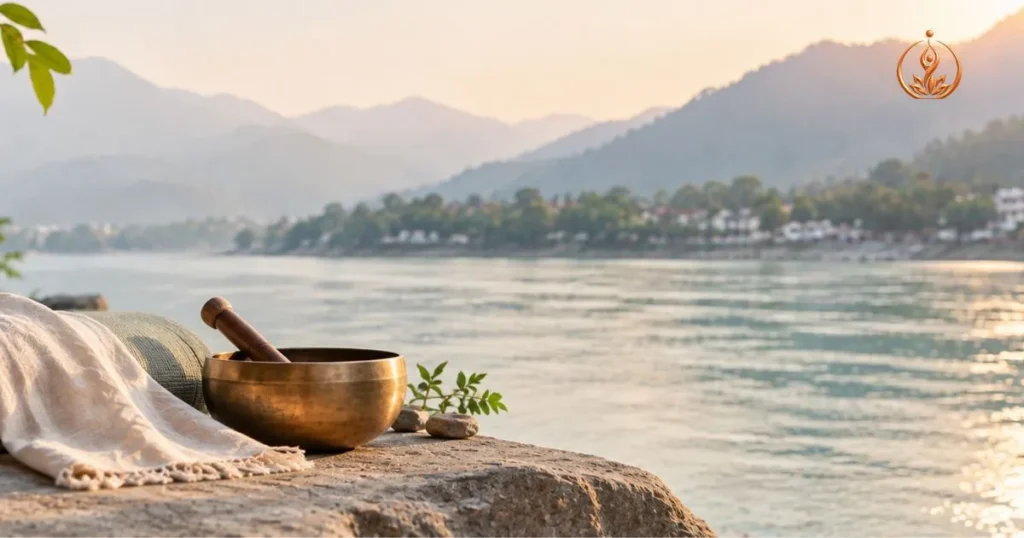
Within three days, there is sufficient time to get into a routine at the retreat and participate in activities like guided yoga, meditation, mindfulness exercises, and spending time in nature. Depending on the specific retreat, participants may have an opportunity to try complementary activities like sound healing and group circles. The goal is not mastery, but experience and absorption of practices.
When Might a Longer Retreat Make More Sense?
If you need to cultivate a practice of your own, dive into yoga and meditation deeply, or just spend more time learning how to live slower, a longer retreat is preferable. A few extra days will ensure greater coherence between classes and will give you more space to think about things.
What to Expect from 3 Days Yoga Retreat in Rishikesh
The 3 days stay at Shaktaa has been planned as a gradual process as compared to a very hectic schedule. The process begins with the arrival and relaxation, then proceeds to practice and contemplation, and finally to integration and closure, so that one gets enough time to explore yoga, meditation, sound healing, nature, and the community.
Day 1 — Arrive & Unwind
The first day is all about getting settled into the retreat and creating comfort. Following arrival and dinner, there is some time to unwind before starting the retreat with a gathering circle and Vedic Hawan. Ganga Aarti, walking along the river, somatic stretch, breathing work and singing bowls round out the night.
Day 2 — Go Deeper
Day two involves more practice and inner work. Sunrise optional sitting by the Ganga, yoga and pranayama are included on this day, along with art therapy, Himalayan sound healing with emphasis on chakras, unstructured downtime, Ganga Aarti, nature absorption circle and sharing circle. The evening ends with a full moon ritual.
Day 3 — Integrate & Offer
The final day focuses on bringing the experience together. An optional Ganga sunrise ceremony is followed by gentle yoga and somatic release, journaling, group chanting, meditation, and an integration session. A closing circle provides space to reflect on what you discovered and what you want to carry forward before the farewell meal and departure.
A Retreat That Leaves Space to Breathe
What makes the three days different from a tightly scheduled wellness itinerary is the space between the sessions. There is time to rest, journal, walk by the Ganga, sit quietly, have a meal together, or simply do nothing for a while. The intention is not to fill every hour, but to give each practice enough room to settle.
For women looking for a 3-day yoga retreat in Rishikesh, this format offers a combination of yoga and meditation with sound healing, reflective practices, nature, and community within a short retreat experience.

What Should You Consider When Choosing Your Yoga Retreat Dates?
Selecting the perfect dates is not just about selecting a period when the weather will be favorable. Your time availability, your travel arrangements, your schedule and even the kind of experience you want out of this yoga retreat can be deciding factors for determining which dates might suit you best.
For the practical things to check before booking, you can also refer to our guide on what to expect from a yoga retreat in Rishikesh.
Begin With How Much Time You Have Available
Your available time is one of the simplest ways to narrow down your retreat dates. A 3 day yoga retreat in Rishikesh can fit into a shorter India itinerary or a long weekend, while a longer retreat gives you more time to settle into the routine and explore the practices in greater depth.
Having extra days when you travel for the sole purpose of going on the retreat would definitely help with that.
Consider what exactly you want to get out of this experience.
If it is simply an escape from your daily routine, a few days might do the trick. If you want more time for yoga, meditation, contemplation, and relaxation, then going for a longer retreat period would make more sense.
Your reason for traveling is as important as the month you go in.
Aligning the Dates of the Retreat With Your Itinerary
The retreat could be more enjoyable if it easily slots in with the rest of your vacation schedule. You should think about whether you have planned to come to Rishikesh only for the retreat or if it is part of another vacation you have planned to India.
Having an open space around the retreat will ensure that you do not feel rushed.
Consider the Rhythm of Your Energy Levels and Schedule
Typically, a retreat includes yoga in the morning, meditation, workshops, time off, and late night activities. Consider your comfort level with the schedule of the programme that you have chosen.
This will be helpful to the newbies. Instead of picking up the available days only, consider how compatible is the schedule of the retreat to the one that you desire while on vacation.
Choose Dates That Give You Enough Space
Some of the best dates for your retreat may not always be those that enable you to fit your programme into the smallest time period possible. This is because when your travel plans are flexible, there is a lot of value in having some leeway on either side of the retreat to settle and then go back to a normal routine.
What About the Price of Yoga Retreat in Rishikesh?
The price of a yoga retreat in Rishikesh might be different based on duration, accommodation, food, sessions, number of people and other factors. A shorter yoga retreat will be suitable for people who have less time and specific budget, whereas a longer one will allow you to spend more time practicing and immerse yourself into yoga.
When selecting the dates for the yoga retreat, take into consideration the total value of the programme and not just its price. Make sure that you know what the programme includes, whether the schedule, accommodation and activities fit your needs.
For more information about yoga retreat prices in Rishikesh, check out our separate guide on the topic.
How to Determine the Right Dates for Your Yoga Retreat in Rishikesh
There is no perfect month that suits everyone’s yoga retreats in Rishikesh. This is because the suitable dates depend on the experience one seeks, comfort level regarding the weather, and time available for the retreat.
A three-day yoga retreat in Rishikesh should involve getting away from one’s daily life, learning about yoga and meditation, and taking a pause amid travels. Longer retreats give enough time to learn, relax, reflect, and experience Rishikesh at a leisurely pace.
It is necessary to take into account the season, duration of the retreat, daily schedule, travel plans, accommodation, and the experience one wishes before making the booking. What is most important is choosing the suitable dates that make one fully participate in the retreat and not rush through it.
Whether you are visiting Rishikesh for your first retreat or returning for a deeper experience, the best retreat dates are ultimately the ones that fit your needs, your time, and the kind of experience you hope to create.
Frequently Asked Questions
Q .1 Is Rishikesh a Good Place for a First Yoga Retreat?
Yes. A beginning yoga practitioner can start with Rishikesh as it provides a proper regimen and gives time for gradual adjustment. Search for a course that explicitly mentions that it caters to beginners and has a balance between yoga and meditation sessions.
Q. 2 How Many Days Should I Stay for a Yoga Retreat in Rishikesh?
A 3-day yoga retreat in Rishikesh is sufficient if you are looking for an interesting introduction into a retreat and you have only got a few days free, and want to have some time to break from your usual schedule and practice yoga, meditate, relax, and reflect.
Q.3 Which season is most comfortable for a yoga retreat in Rishikesh?
The more comfortable months generally depend on your tolerance for temperature, humidity, and rainfall. October to March is often preferred for cooler conditions, while other seasons can offer a quieter or greener experience. Rather than choosing a month based only on weather, consider whether the seasonal conditions suit the type of retreat and outdoor activities you want.
Q. 4 Is There a Time of Year That May Be Less Suitable for a Yoga Retreat in Rishikesh?
The monsoon months from July to September can be less convenient for retreats that rely heavily on outdoor activities because of rainfall, humidity, and changing travel conditions. If outdoor yoga, Ganga walks, or exploring Rishikesh are important to you, consider how seasonal weather may affect your plans before choosing your dates.
Q. 5 Can I combine a yoga retreat with a wider Rishikesh or India trip?
Yes. A retreat can be incorporated into a wider itinerary, particularly when you choose a shorter programme. Leaving some time before or after the retreat can make the journey less rushed and give you space to adjust before beginning the retreat or return to regular travel afterwards.
Q. 6 What should I check before booking a yoga retreat in Rishikesh?
Look beyond photographs and the advertised price. Check the retreat’s duration, daily schedule, accommodation, meals, yoga and meditation sessions, experience level, location, group size, and what is actually included. Your priorities may differ depending on whether you want a short reset, a deeper practice, or a more wellness-focused experience.