
Have you ever felt an inner yearning to sit in stillness, perform ritual, listen to the wisdom of your body? That yearning has a name, too. It is divine feminine energy, also known in Sanatana Dharma as Shakti.
Shakti is not a fleeting trend or buzzword; it has been around in Indian spirituality as long as we have known anything about it. The idea of Shakti posits that not only does the universe function as a manifestation of consciousness, but it is infused with a living, creating force, which is inherently feminine. Waterfalls, saplings growing from the earth, women bringing forth children or going about their day with power – all of that is the expression of Shakti.
The Meaning of Shakti: More Than a Word
The term ‘Shakti’ is derived from the Sanskrit language and means power or energy. In Hindu theology, however, it is much more specific and describes the active power that creates, sustains, and dissolves in the universe.
In this paradigm, consciousness (or Shiva) is still and formless — pure awareness devoid of any movement. It is the power of Shakti that brings that awareness into form. Without it, nothing takes place. A thought remains a thought. An intention remains an intention. She transforms potential into reality and hence she is always described as female – as a Mother who brings her child to life.
Ardhanarishvara is the perfect example here – the divine being that is at once both half male and half female, thus illustrating the concept of Shiva and Shakti as two halves of the same whole and not opposites striving for domination.
Shakti, the Divine Feminine Goddess in Her Many Forms
One of the biggest misconceptions about Shakti is that she is only one Goddess. However, this is very far from the truth. Shakti is a principle that assumes millions of manifestations depending on the qualities of power which are revealed.
The Nurturer and Creator
Lakshmi and Saraswati are two examples of such a manifestation of Shakti — they stand for abundance and grace of the Goddesses, respectively. Wisdom, art and knowledge are other qualities of Shakti which can take different manifestations.
The Protector and Warrior
Durga riding into battle against the enemies which cannot be defeated by any other person or God represents Shakti’s ferocious side. It is a reminder that gentleness and fierceness of the divine feminine energy can live together within a woman.
The Transformer
Kali is an example of Shakti’s face which is often misunderstood — this Goddess destroys those things that do not work anymore to make room for renewal. However, Kali is not “dark” — her actions have nothing to do with negativity and they are very sacred in nature.
The Beloved
Parvati in the role of Shiva’s wife represents Shakti in her relationship state.
Taken together, these forms indicate that divine feminine power was never intended to pigeonhole the woman into a single mold. Rather, it was supposed to portray her in all her glory in one instant – a nurturer, the next a warrior, wise, loving, and transformative at once.
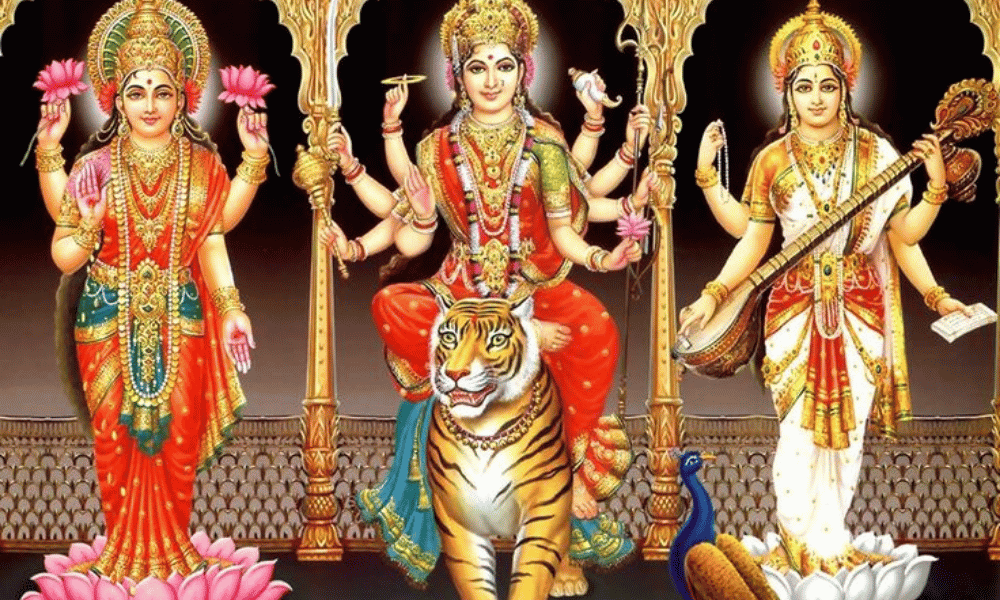
Divine Feminine Energy Beyond Mythology: What Most Articles Miss
The usual discussion on the matter is limited to mythology and philosophy; and it is beautiful, but not sufficient. The question that most people ask is: how can I become more grounded in this energy myself?
It is because the reality of life is such that we are designed to take us away from our Shakti: productivity, overscheduling, being out of tune with the natural flow of our body and mind, holding emotions in so as to remain ‘composed’.
Signs You Might Be Disconnected From Your Shakti
- Feeling disconnected from your body or menstrual cycle
- Having an urge to engage in ritual or practice silence but feeling lost as to how to do so
- An impression that you are “acting” your life as opposed to really living it
- It does not mean that there is anything wrong with you. It typically means only that your Shakti has lain dormant for a while now, just waiting to be awakened.
None of this means something is wrong with you. It usually just means your Shakti has been quiet for a while, waiting to be invited back.
If these signs feel familiar, our beginner’s guide to reconnecting with the Divine Feminine walks through where to start.
Simple Ways to Reconnect With Divine Feminine Energy
You don’t have to go to a cave in the Himalayas to experience this transition. Just a few simple techniques will get you far:
- Mindful breath work – just a five-minute exercise in breathing deeply tells your nervous system it’s time to unwind from your continuous “getting stuff done” mentality.
- Rituals based on the moon phases – stopping and taking note of the new and full moon means bringing yourself back into awareness of the circular, rather than linear, and feminine flow of time.
- Physical activity without competition – dancing freely in your room, stretching without tracking repetitions, letting your body move however it likes.
- Sacred pauses – lighting candles, journaling, or just being silent for a few moments at the beginning of your day.
- Community – Shakti has always been a community experience. Historically, women came together in circles to sing, grieve, celebrate, and support each other; sisterhood itself is divine feminine energy.
If you want this guided rather than self-taught, this is exactly the space Shaktaa’s women’s retreats in Rishikesh were built for — a few days away from noise, held by ritual, sound, and sisterhood.
Divine Feminine Quotes to Sit With
There are times when one line accomplishes what paragraphs fail to achieve. Below are a number of original observations that are worth remembering.
“Shakti does not call upon you to be greater. She calls upon you to stop pretending to be less than what you are.”
“Gentleness is not weakness. It is strength that has nothing left to prove.”
“A woman does not have to choose gentleness or unstoppable force. Shakti has always been both.”
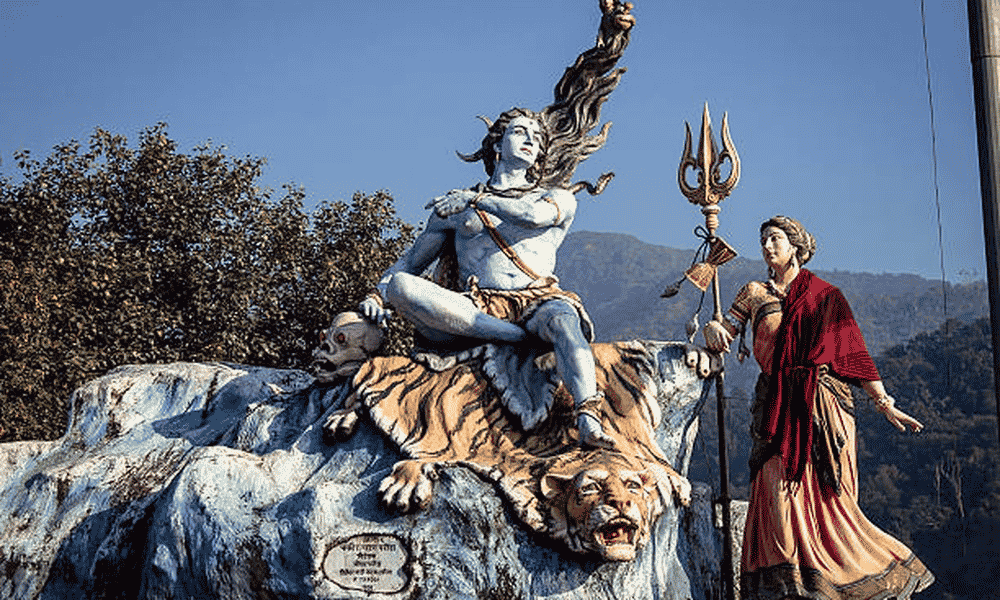
Shakti and Shiva: A Balance, Not a Hierarchy
To reiterate, revering the feminine power of God does not entail disrespecting the masculine aspect. According to ancient Hindu texts, Shiva and Shakti represent the same entity, inseparable from each other: one cannot exist without the other. The quest for Shakti is thus not an effort to counterbalance anything else but merely to bring back equilibrium which some women feel has long been lost.
Other Faces of Shakti You’ll Come Across
A few related terms often get mixed up with the core idea of Shakti, so it’s worth untangling them briefly.
While Kundalini Shakti is related to the Shakti we’ve been referring to, it is quite different in nature. Kundalini is a term used for dormant energy that is located at the base of the spine and needs to be awakened and channeled up during yogic practices. Consider cosmic Shakti as an ocean, then Kundalini Shakti would be a wave of that water.
Nine days long celebration of Navratri in India celebrates the nine different aspects of Shakti – nine forms of Durga or Navadurga – ranging from Shailaputri (daughter of mountains) to Siddhidatri (who gives spiritual accomplishments). Every day of Navratri is devoted to one particular aspect of Shakti making it a nine-day meditation on the whole idea of Shakti.
Menstrual cycle, which is part of women’s biology, is considered in some feministic religions as an analogy to the creation-release-nurturing process of Shakti – which, nowadays, gets disrupted by our hectic lives.
Why Divine Feminine Energy Matters Right Now
It’s no surprise why this age-old wisdom is speaking to so many women at this moment in time. In a world that celebrates productivity over stillness and reason over instinct, Shakti provides a radical notion: permission. Permission to feel everything, permission to rest guiltlessly, permission to listen to your body, and permission to take up space with all your softness and strength.
Discovering Shakti is not about acquiring a new form of beauty. It’s about reclaiming a power that you’ve never really lost but perhaps silenced for far too long. Whether through ritual, community, sound, or even just waking up slower, tuning into your feminine divine self is not so much about transforming into someone else as it is about returning to yourself.
Frequently Asked Questions
1. What is Shakti in simple words?
Shakti is the Sanskrit word for divine feminine energy — the active, creative power believed to bring the universe into form. It’s often paired with Shiva, representing formless consciousness.
2. Is Shakti a goddess or an energy?
Both. Shakti is the underlying energy itself, and she’s also personified as specific goddesses like Durga, Kali, Lakshmi, and Parvati, each representing a different facet of that power.
3. How do I know if my divine feminine energy is blocked?
Common signs include feeling emotionally numb, disconnected from your body, resistant to rest, or like you’re constantly “performing” rather than living. These are gentle signals to slow down and reconnect, not something to fear.
4. Can men connect with Shakti too?
Yes. While Shakti is described as feminine energy, everyone — regardless of gender — has access to it. It represents qualities like intuition, creativity, and emotional depth that exist in all of us.
5. What’s the difference between Shakti and Kundalini?
Shakti is the universal, cosmic energy behind all creation. Kundalini is a personal, dormant form of that same energy said to rest at the base of the spine, awakened through yogic practice. All Kundalini is Shakti, but not all Shakti is Kundalini.
6. What is Navratri’s connection to Shakti?
Navratri is a nine-night festival honoring nine forms of Durga, each representing a different quality of divine feminine energy — from strength and wisdom to grace and spiritual attainment.
7. What’s a simple daily practice to connect with Shakti?
Start small: five minutes of deep breathing, a moment of stillness before your day begins, or moving your body without any goal in mind. Consistency matters more than intensity.