
To choose a yoga retreat in Rishikesh, first define your purpose (relaxation, yoga learning, meditation, or community building). Then verify six criteria: the schedule for the day (how many practice and free hours per day), who will lead the classes and their qualifications, the size and level of groups, the exact address of the place and its tranquility, what is included in the price, and the conditions of refunding in writing.
Also, match the duration to your goals: three days for a relaxation or initial experience, and a week or more for getting used to the schedule. Finally, inform the instructors about injuries or illnesses you have before coming to the retreat. Select the retreat in Rishikesh that corresponds to these criteria, not the one with nice pictures.
Start with your goal, not “the best.”
Look for the best yoga retreats in Rishikesh, and you will find scores of places that promise the same sunrise on the Ganges and the same feeling of “reconnecting.” The difference lies in what each place is designed for. The person who wants five hours of asana every day will be disappointed in a gentle program, and the one who just needs to relax will be exhausted in a rigid program.
This should therefore guide you when comparing things. In case your motivation is rest, then you will require a light schedule, leisure time, and silence. For a first yoga experience, then you will need classes suitable for beginners where postures may be modified. For stillness, then the meditation retreat with silence structured into the day will be more beneficial as compared to the retreat, which takes it as an add-on option. Finally, if your motivation is the company, then the size of the group and food will count more than classes. The types of retreats also vary, and it would be useful to know how a retreat in Rishikesh varies according to type.
1. Read the daily schedule
The schedule is the fastest way to find out just how intense the retreat really is. You can ask about how many hours of training are in a day, when the first training commences, how much of the afternoon will be left for you to enjoy, and whether there are any optional training sessions. A good day that has some rest time included is definitely a green light.
Be careful with the word “days” too. Many short programs count arrival and departure days, so a “3-day” retreat can mean two full days plus two half-days. Travellers weighing short stays often work through a checklist for choosing a 3-day yoga retreat before paying, and it’s fair to ask any provider exactly how the time is divided.
2. Check who teaches and what credentials mean
Make sure to inquire about the training of each teacher, their experience, and whether they have worked with people at your level. A good teacher should be able to provide specific information rather than general phrases.
There is one thing that people often get wrong. The “RYS” (Registered Yoga School) status by Yoga Alliance is applied to teacher-training programs, and Yoga Alliance defines its system as a registry, not an accreditation or certification system. Therefore, “Yoga Alliance certified retreat” is just a vague term. In case a service provider uses it, make sure to find out what exactly is registered (the school, the teacher, or the training) and look for it in the Yoga Alliance directory. Credentials are one indicator. Another one is an honest answer.
3. Ask about group size and level
The number of people in the retreat will determine everything from the amount of individual instruction you receive to the ease of finding some peace and quiet. The smaller the class, the more personal attention you can expect, which is particularly important for a brief vacation. Inquire about the maximum number of participants, whether there are mixed levels, and whether the class is all-women or mixed. For beginners, make sure that classes are truly beginner-level.
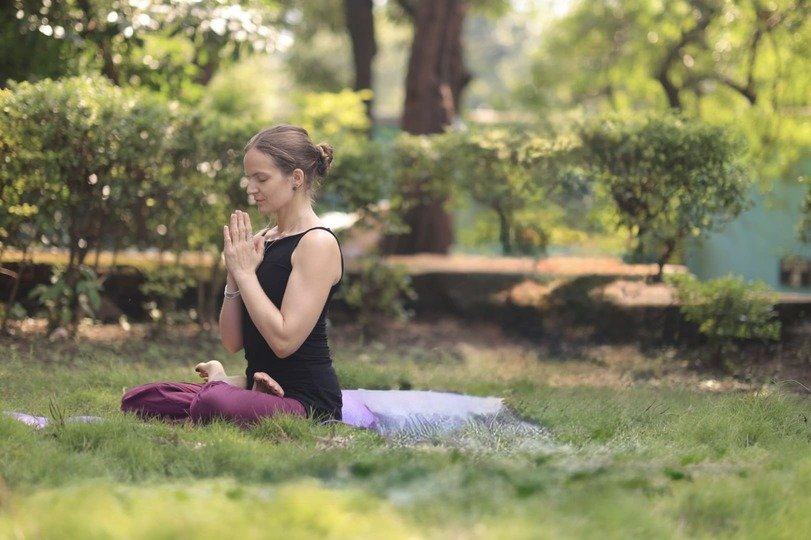
How to choose a peaceful yoga retreat in Rishikesh
““Peaceful” is difficult to determine via a photograph since it does not capture sounds, crowds, and general ambiance. Try these instead:
- Venue location: Places near Tapovan and Laxman Jhula are more active places with cafes, shopping centers, and crowds. Calm places far away from such spots require transport to get into town. Ensure to ask for a venue address and map pinpoint, and not a location “near the Ganga,” since proximity to the river can mean a walk to the bank or a journey.
- Built-in breaks: Find venues offering free afternoons, classes, or time between exercises.
- Noise policy: See if there are quiet hours and a ban on phones or screen lights and the enforcement of those.
- Type of room: Ask if rooms are private or public and their proximity to the road and other visitors.
- Season: This affects weather conditions and crowd levels throughout the year, which is why many visitors check the best time for a yoga retreat in Rishikesh first.
4. Match the length to your goal
Three days is enough as a kind of reset or a start for a retreat, but it will not make a regular practice. That’s why the 3 days yoga retreat in Rishikesh is chosen by many first-timers—it can be fitted into their schedule, and it’s enough to experience the rhythm of practice, relaxation, and meditation. Seven days and even more give you a chance to get adjusted to the rhythm and see how it changes you. If you have plans for teacher training, then a longer program is better for you.
5. Treat add-ons like sound healing with curiosity
Many retreats these days come with a few extras included in their package as well. Sound healing in Rishikesh, for example, is commonly based on sound healing through singing bowls; other healing methods like Vedic meditation, Ayurvedic healing, or fire rituals also come with an element of ceremony and culture. While they can be enjoyable elements of your experience, it is important that you think about the person leading the session, their qualifications, and the actual content of the session itself. Consider them relaxation methods, not medicine.
6. Think about health and safety
Yoga is generally safe for healthy individuals when practiced correctly; however, accidents do happen, and the likelihood of this is reduced if you practice yoga with an experienced instructor. Some useful tips include:
- Informing your instructor prior to coming to class about any injuries or medical conditions.
- In case of a medical condition or pregnancy, consult your medical practitioner.
- Asking the availability of modifications from the instructors.
- Asking the distance to the nearest clinic or hospital.
7. Compare inclusions, not just the headline price
Two retreats that cost the same will not necessarily be identical. It is important to ask precisely what is included in the price:
- Transportation: Is transportation from the airport or train station included, and who will meet you there?
- Accommodation: Is it a private room or a dormitory, with a private or shared bathroom?
- Meals: How many per day? Vegetarian or sattvic? Can special diets be catered for?
- Classes, treatments, and activities: Yoga classes, mats, treatments, excursions, and admission tickets.
- Not included: Airfare, insurance, visa, laundry.
It is essential to check the cancellation policy before paying any deposits because short retreats frequently have short refund periods.
8. Read reviews like a skeptic
Instead, look at recent and specific reviews on other platforms, such as Google, Tripadvisor, or retreat booking sites, and not just reviews on the host’s website. Pay attention to what people say about the teaching, food, hygiene, communication, and group dynamics, and how the host reacts when things went wrong. A couple of detailed reviews will give you more information than a bunch of five-star comments.
Red flags and green flags
| Red flag | Green flag |
| Vague or missing schedule | A sample day with rest built in |
| Promises to “cure” or “heal” conditions | Honest limits on what a retreat can do |
| Venue unnamed, “near the Ganga” only | Named venue and map pin |
| Pressure to book immediately | Time to ask questions, clear refund terms |
| Only self-published testimonials | Recent independent reviews |
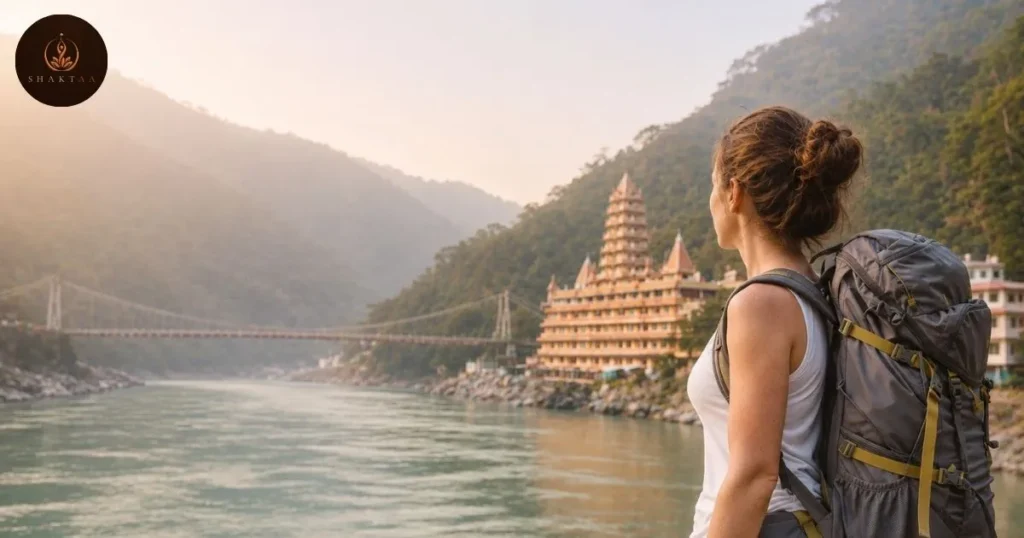
9. If you’re travelling alone as a woman
Rishikesh is a popular destination for women travelling solo, and a few extra questions are worth asking before you book:
- Who meets you on arrival, and can transfers be arranged in daylight?
- Who else is in the group, and what is the age range?
- How far is the venue from town, and how do you get back?
- Can you message the host before booking?
A small, women-only women’s wellness retreat can also make it easier to meet people and settle in, since the group is built around shared space and shared pace.
FAQs
What should I look for in a yoga retreat in Rishikesh?
Look for an obvious daily schedule, teachers who can give details about their training, group sizes specified, a location listed, full inclusions, and refund policy in writing. Next, ensure the purpose is aligned to your reasons for participating.
Is a 3-day yoga retreat in Rishikesh enough?
Yes, a 3-day yoga retreat in Rishikesh is enough for a reset or an introduction to retreat life. It is not enough to build a lasting practice, so choose a longer stay if that is your goal.
Can beginners join a yoga retreat in Rishikesh?
Many retreats welcome beginners, but levels vary. Confirm the level in writing, and ask how teachers modify poses.
How do I find a quiet retreat in Rishikesh?
It is best to verify the venue location, size of the group, room type, and schedule instead of relying only on pictures. Also ask for the name of the venue and its map pin.