If you’ve searched “women’s retreat in Rishikesh” more than once this month, you’re not alone — and you’ve probably already read a few generic retreat guides that all say the same three things: pack layers, expect vegetarian food, no experience needed. All of it, true. None of it tells you what actually happens when the group is only women, and why that changes almost everything.
So this is what this one really gets into—the basics that you see on every retreat page out there, plus the part that only matters when you’re sitting in a room full of women and no one else. That is what makes a regular retreat a women’s healing retreat, and it is the very thing most guides gloss over.
Why Women’s Space in Special and Why Rishikesh
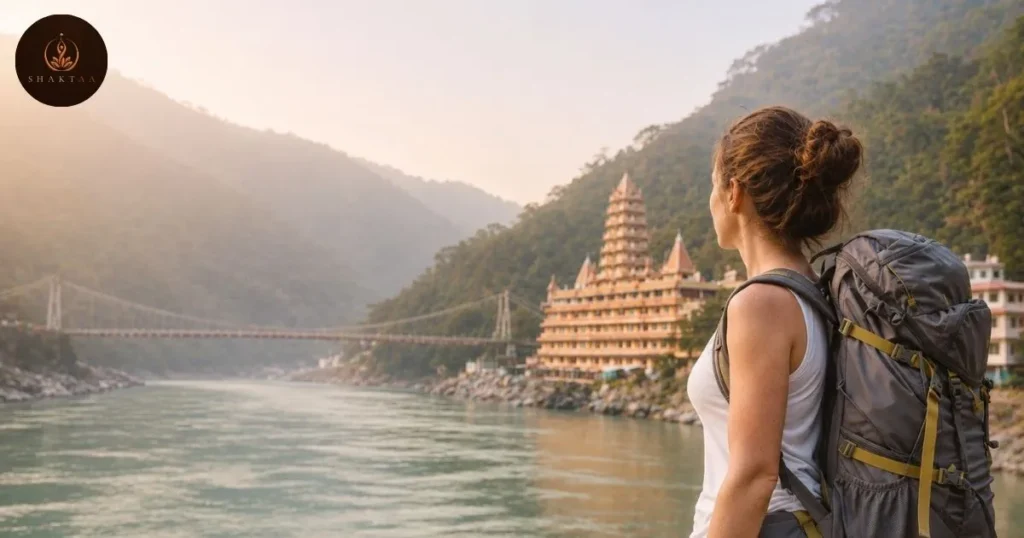
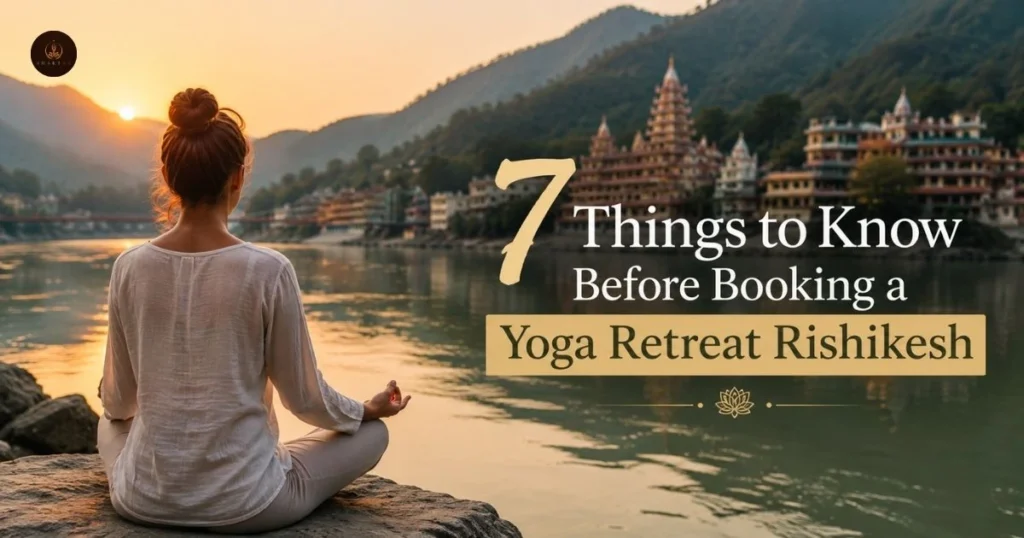
Rishikesh has been a seat of yogic and meditative practice for centuries — the Ganga flowing down from the Himalayas, the cooler mountain air, a town that’s structured around practice rather than tourism. That bit you can see on most retreat websites.
What they don’t tell you is that a women only retreat is a whole different animal.
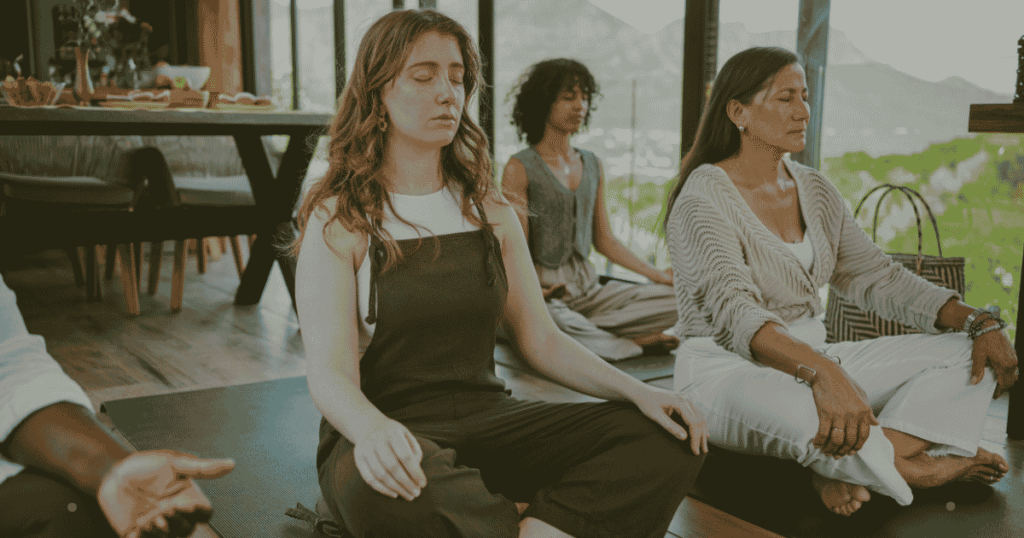
Sharing circles go further: Without the social performance that often creeps into mixed-gender groups, women tend to speak more honestly and cry more freely — not because it’s forced, but because the room feels safer.
Movement practices such as ecstatic dance have a different impact: Many women describe self-consciousness melting away faster in an all-women space than they expected.
For many it is the first real break from caretaking: For many women – who are juggling careers, families or both – a retreat is no holiday. There are a few days when nobody wants anything from them for the first time in forever.
At Shaktaa, this is the exact space our retreats are built around — not generic wellness, but women’s healing specifically, rooted in Vedic tradition rather than borrowed from it.
A Realistic Day-by-Day Picture
Every retreat runs a little differently, but most women’s retreats in India — including ours — follow a similar emotional arc across the days, not just a packed timetable.
Day One: Arriving, Not Performing
Expect a slow entry point, not an intense one:
- A welcome ritual, often a hawan — a Vedic fire ceremony marking new beginnings, where the fire itself is treated as a witness to intention
- Informal introductions – not a forced circle of disclosure
- An early, gentle evening practice to help you actually sleep after travel
The Middle Days: Where the Real Work Happens
This is the heart of most women’s healing retreats:
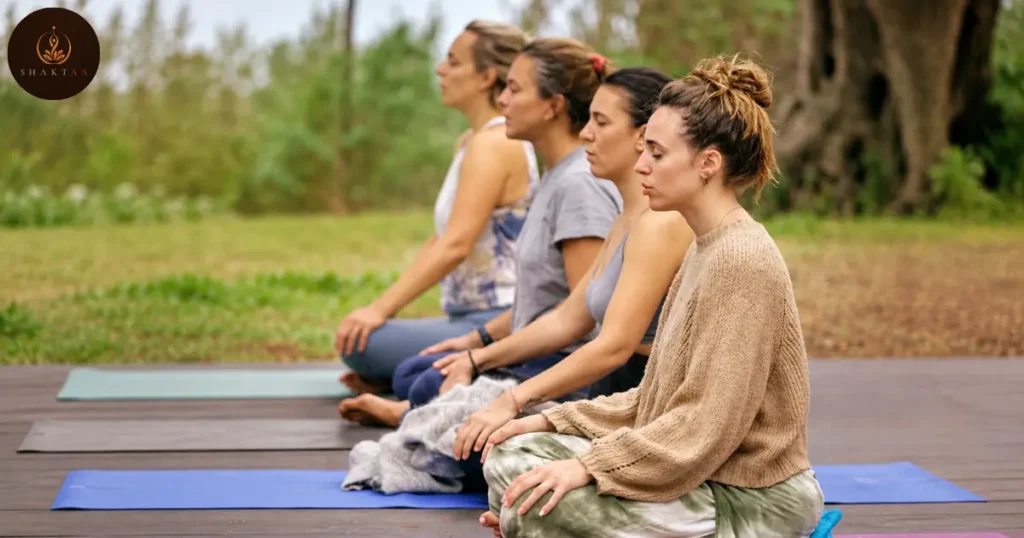
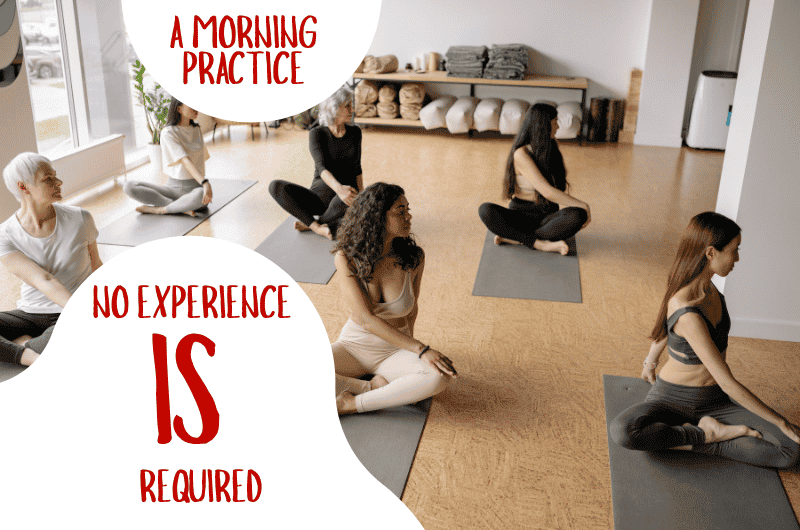
- Sunrise meditation or pranayama by the river – mornings in Rishikesh are considered especially still
- Movement practices – yoga alongside less conventional ones like ecstatic dance or somatic release work
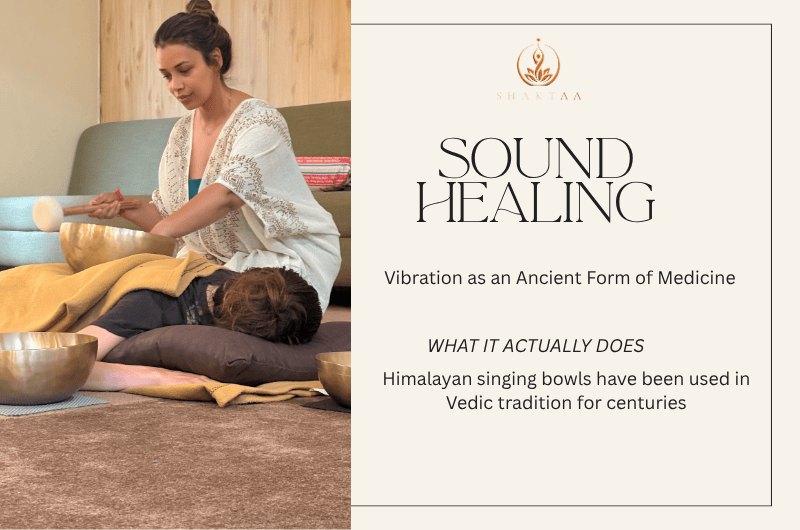
- Sound healing with Himalayan singing bowls, usually in the evening to help the nervous system downshift
- Opt-in sharing circles – you speak only if and when you choose to
- Genuine free time – unscheduled hours that are part of the design, not a scheduling gap
A few honest things worth knowing beforehand:
- Sound healing sessions often bring up unexpected emotion — tears, laughter, or unusual tiredness afterward are all normal nervous-system responses, not signs that anything is wrong.
- Ecstatic dance feels awkward for roughly the first ten minutes for almost everyone. Then it stops feeling that way.
- If your instinct is to fill every free hour with activity, notice that urge. Doing nothing is intentional here, not accidental downtime.
The Final Day: Closing the Circle
Most retreats — ours included — close with a Ganga ceremony, often involving floating diyas as a symbolic release, followed by a shared final meal and a noticeably different energy than the anxious arrival on day one.
What You Won’t Be Asked to Do
Most hesitation around a women’s wellness retreat comes from assumptions that simply aren’t true. You will generally not be expected to:
- Arrive with any yoga, meditation, or breathwork experience
- Follow a specific religion – Vedic practices are offered as tools, not belief requirements
- Share anything personal you’re not ready to share
- Maintain a certain fitness level – practices are adapted to your body
- Perform or “have it together” in front of other women
Food, Packing, and the Practical Basics
Like most retreats in Rishikesh, expect:
- Simple, sattvic vegetarian meals — fresh, light, and easy on the system, eaten communally
- Layers of comfortable, modest clothing – mornings by the Ganga are cooler than expected
- A light shawl for early sessions and evening ceremonies
- Comfortable walking shoes for ghats and uneven tracks.
- A journal — most women use it more than they expect to
- A reusable water bottle, and minimal valuables, to be honest.
Fears vs. Reality
| What you’re worried about | What usually happens |
| “I’ve never meditated in my life” | Sessions are guided step by step — most attendees are first-timers |
| “I’ll be the odd one out” | Groups are usually a genuine mix of ages, cities, and life stages |
| “It’ll feel too religious for me” | Practices are offered as optional tools, not belief systems |
| “I won’t have any privacy” | Retreats are kept intentionally small (10–15 women) to avoid this |
| “I won’t know anyone and it’ll feel awkward ?” | Most women arrive solo — by day two, the group usually feels more like old friends than strangers |
Is It For You?
If you are feeling depleted, out of sync with your own rhythm, or quietly curious about practices you have only read about, a women’s retreat in Rishikesh tends to meet you exactly where you are. It’s less about a dramatic before-and-after and more about creating space — literal and internal — to hear your own thoughts again.
If this sounds like the pause you’ve been needing, our own retreat, Lalita — Knowing Your Playful Self, follows much of this same arc, built specifically for women new to this kind of experience.
Frequently Asked Questions (FAQ’s)
Is Rishikesh safe for solo female travelers?
Yes, it is safe, particularly for any retreats in a particular place. With small groups and proper pick-up arrangements, it becomes much safer. For more information regarding accommodation, safety measures, and the choice between traveling alone or going on a retreat, please check out our comprehensive women solo travel in Rishikesh guide.
What is a 3-day yoga retreat in Rishikesh?
A shorter yoga retreat that includes yoga, meditation, and sometimes even ceremony on the Ganges river. It’s ideal for beginners and short visits.
What’s the difference between a women’s retreat and a regular yoga retreat in Rishikesh?
The practices are quite the same but not the container in which you’ll do them. Women will be able to share their emotions and experience more
What’s the best time of year for a women’s retreat in Rishikesh?
September to November and February to April have cool and clear weather. Women’s winter retreats are held as well with more clothing.
How much does a yoga retreat cost in Rishikesh?
Short retreats for 3 days cost about ₹7,000 to ₹9,000. Longer retreats for 7–10 days with Ayurveda cost ₹20,000 to ₹35,000+.