

The symptoms of a blocked sacral chakra typically include emotional numbness, lack of creativity, and detachment from pleasure, one’s body, and people around them. In yoga philosophy, the sacral chakra (Svadhisthana) is known as the chakra of emotions, creativity, and flow, and it opens up with hip-opening yoga practice, the VAM mantra, water, and self-compassion. Here are the seven signs to watch out for, followed by a step-by-step guide to fixing the sacral chakra of women with a blocked sacral chakra.
What Is the Sacral Chakra (Svadhisthana)?
Svadhisthana means “one’s own dwelling place.” It is the second of seven main energy centers, located in the lower belly, a few finger-widths below the navel, near the pelvis and hips.
Traditionally, it is linked to the water element, the color orange, and the qualities of flow: feeling your emotions, enjoying pleasure, creating, and adapting to change. When water moves, it stays fresh. When it stagnates, so do your feelings and ideas. A blocked sacral chakra is simply water that has stopped moving.
If you’re new to this idea, our beginner’s guide to the 7 chakras explains the whole system.
An honest note: chakras are a traditional framework, not something science can measure. We use them as a gentle lens for noticing how you feel and choosing supportive practices. They are not a diagnosis and do not replace medical or mental health care.
7 Blocked Sacral Chakra Symptoms to Look For
Read these as a mirror, not a test. Many women recognize a few of them, especially after long stretches of giving to everyone else.
1. Feeling emotionally flat or numb
Neither sad nor happy, but rather muted. You know that you’re supposed to feel something, but it’s behind glass.
2. A creative block
Lack of ideas. You stop writing, cooking, dancing, decorating or thinking of anything new for yourself. Even minor creative decisions become overwhelming.
3. Guilt around pleasure and rest
Slow mornings, bathing or just enjoying something becomes “unearned.” Relaxing only happens after everything else is taken care of, but that is never the case.
4. Not knowing, or not saying, what you want
You are good at reading other people’s needs, but have no clue about your own. Using “I want” feels weird.
5. Feeling disconnected from your body
Your body feels like an instrument or an issue, not a safe place to be in. Women sometimes experience low sex drive or discomfort during physical intimacy. If it’s new or concerns you, see a doctor because hormones, insomnia, stress or health can all be factors.
6. Tight hips and tension in the lower belly or back
Hips are the place where we usually keep a lot of unexpressed emotions, according to traditions. Persistent pain should always be checked by a doctor first.
7. Pulling away or losing yourself in relationships
You either keep people at arm’s length to stay safe, or merge so completely that you lose your own preferences.
If three or more sacral chakra blockage symptoms sound familiar, your sacral energy might simply require more movement and permission. It’s information, not a problem and recognizing a blocked sacral chakra is just the first step towards reclaiming yourself.
Blocked or Overactive? A Quick Self-Check
Most guides skip this, but the sacral chakra can swing both ways.
| Under-active (blocked) | Balanced | Over-active | |
|---|---|---|---|
| Emotions | Numb, flat, distant | Felt and expressed with ease | Flooded, intense, swinging |
| Creativity | Stuck, no ideas | Playful, flowing | Scattered, can’t finish |
| Pleasure | Guilt, avoidance | Enjoyed without shame | Seeking escape or numbing |
| Relationships | Withdrawn, guarded | Open with boundaries | Clingy or overly dependent |
Under-active is more common when you’ve been in caregiving or high-pressure mode for a long time. Over-active often appears after emotions have been held down for too long and finally spill out.
Emotional Numbness: What It Can Mean
Emotional numbness is one of the clearest signs of a blocked sacral chakra, and it is a gentle protective response. When feelings have felt too big, too inconvenient, or too unsafe, the system dims them to cope. In sacral terms, the water stops moving.
Please don’t force yourself to “feel” on demand. Start smaller: name one sensation a day (warm, tight, heavy, light), move your hips for two minutes, or sit near water. Feeling returns by safety, not pressure. If numbness lasts or comes with low mood, please speak with a mental health professional.
Creative Block: It Isn’t About Talent
A creative block is one of the most common signs of a blocked sacral chakra, and it is rarely a lack of ideas. It is usually the fear of judgment, the habit of perfection, or having no space that is just yours.
Try five minutes of unplanned making: doodle, hum, rearrange a shelf, write badly on purpose. The goal is to let your hands play with no audience and no result. Creativity is a muscle that responds to low-stakes practice.
Why Women Often Feel This One So Strongly
Many women carry layers that land in this part of the body: messages about being “too much,” shame around the body, caregiving that leaves little room for desire, and cycles that are rarely honored. Over time, the habit of managing everyone else’s feelings can leave your own flat. This is how blocked sacral chakra symptoms quietly settle in.
At Shaktaa, our approach is rooted in honoring divine feminine energy: the idea that feminine creativity and emotional flow aren’t a luxury, they’re part of how you stay well. Rest, play, softness, and self-expression are not things to earn.
Start With Your Root
In many yoga traditions, you work from the ground up. When you feel anxious, scattered, or unsafe, it is hard for the sacral energy to relax and flow, because the body is still bracing.
If that sounds like you, begin with our guide on blocked root chakra symptoms, where we share grounding poses, the LAM mantra, and sound practices we use at Shaktaa. Feeling steady first often makes the sacral work gentler and more effective.
How to Heal the Sacral Chakra for Women: 5 Practices
You don’t need all five. Choose one or two and repeat them for a few weeks, because a blocked sacral chakra softens with small, steady steps.
1. Sacral Chakra Yoga Poses: A Gentle Hip-Opening Flow
Hip opening yoga is the most direct way to work with a blocked sacral chakra. Move slowly and stop at “stretch,” never “strain.”
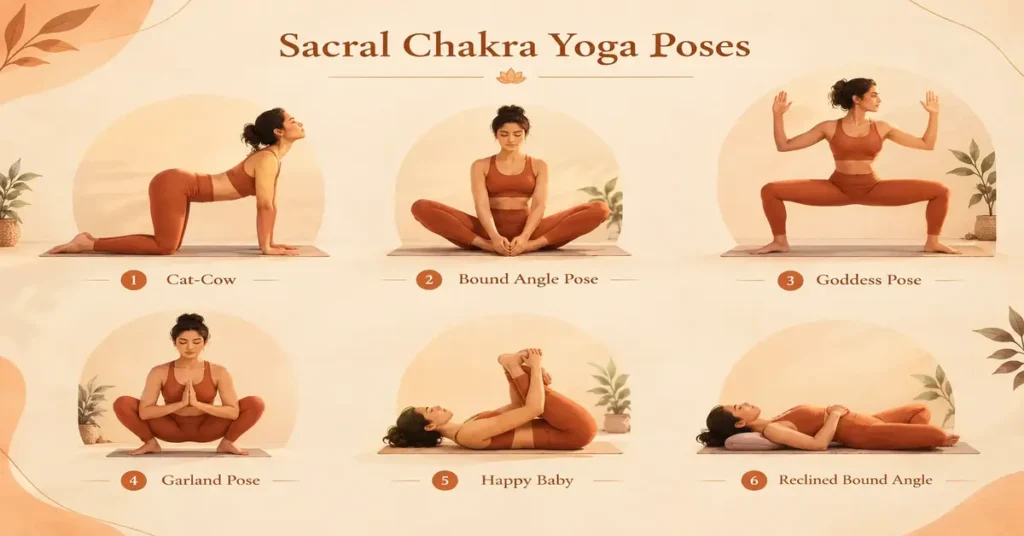
- Cat-Cow with hip circles: On hands and knees, circle your hips in slow, wide arcs, like stirring a pot.
- Bound Angle Pose (Baddha Konasana): Sit with the soles of your feet together and let the knees fall open. Place blocks or cushions under your knees if they lift high.
- Goddess Pose (Utkata Konasana): Wide stance, toes turned out, knees tracking over toes. Breathe into the lower belly.
- Garland Pose (Malasana): A deep squat for hips and pelvic floor. Rest your hands in prayer and fold a blanket under your heels if needed.
- Happy Baby (Ananda Balasana): On your back, hold the outer feet and rock gently side to side.
- Reclined Bound Angle (Supta Baddha Konasana): Lie back with soles together and a bolster or pillow under your back. Stay for 2 to 3 minutes.
Hold each for 5 to 8 slow breaths. Skip or modify deep hip openers if you are pregnant, recovering from injury, or have knee or hip pain, and check with a teacher or doctor. For a full beginner routine, see our guide to building a chakra yoga practice.
2. Chant the VAM Mantra
VAM (pronounced “vum”) is the traditional seed sound of the sacral chakra. Sit comfortably with your hands on your lower belly. Inhale deeply, then chant “VAAAM” softly on the exhale, feeling the hum in your belly. Repeat 5 to 10 rounds.
Picture a warm orange glow, or a slow tide moving in and out. Sound is especially helpful for emotional numbness because it brings feeling into the body without asking you to analyze it. In our sound healing sessions in rishikesh, bowls and mantra are used together to help emotions soften and move.
3. Work With Water
Since the water element belongs here, use it simply: a warm bath, a slow shower with your attention on the sensation, a walk by a river or lake, or even sipping water mindfully. It’s an easy ritual that signals “it’s safe to flow.”
4. Sacral Chakra Affirmations
Say them slowly, with a hand on your lower belly. Choose words that feel believable.
- I allow myself to feel.
- My creativity is welcome here.
- Rest and pleasure belong to me.
- I am free to express my thoughts.
- My emotions are safe to move through me.
If one seems out of place, soften it: “I am learning to allow myself to feel.” Pick one and practice it for a week.
5. Sacral Chakra Foods and Play
Sacral chakra foods: Oranges, mandarins, mango, papaya, carrots, pumpkin, apricots, coconut water and nuts are the food items related to the water element and thus recommended by tradition.Eat slowly and enjoy the taste.
Play: Put on music and dance in your kitchen, paint without a plan, or cook something just because it smells good. Small, regular play is as important as any pose.
A 10-Minute Sacral Chakra Routine
- Minutes 1-2: Hip circles on hands and knees, breathing slowly.
- Minutes 3-5: Goddess Pose and Garland Pose, a few breaths each.
- Minutes 6-8: Bound Angle, then chant VAM, hands on your belly.
- Minutes 9-10: Lying back in Reclined Bound Angle and repeat one affirmation.
Do it 4 to 5 days a week for two to three weeks before judging results. Water is patient, and so can you be.
Be Gentle: When to Get More Support
In case any past wounds, traumas, or tough situations arise in class, I would appreciate if you slow down and do not push yourself further. Leave any pose which is too much for you at the moment and go back to your breathing or to some other calming activity. Psychotherapy or counseling can beautifully complement yoga practice. In case blocked sacral chakra symptoms such as numbness, depression or relationship problems interfere with your life, please visit a doctor or psychologist.
Going Deeper: Softening in a Supported Space
Reading about flow and actually feeling it are different things. It’s hard to soften while you’re still managing messages, meals, and everyone’s needs.
That’s why many women find a few days away helpful: guided yoga, sound, and quiet time with nothing to perform. If you’ve been curious, a 3-day yoga retreat in Rishikesh is a gentle place to begin, without the commitment of a long stay. And if you’re still deciding, this guide on how to choose a 3-day yoga retreat in Rishikesh can help.
Frequently Asked Questions
What are the most common blocked sacral chakra symptoms?
The most common blocked sacral chakra symptoms are emotional numbness, a creative block, guilt around pleasure, difficulty knowing what you want, feeling disconnected from your body, tight hips, and pulling away from or losing yourself in relationships. These are traditional associations, not medical diagnoses.
How do I heal the sacral chakra as a woman?
Combine hip-opening yoga, the VAM mantra, water rituals, affirmations, and small daily acts of play. Practice 10 to 15 minutes, 4 to 5 days a week, and work with your root chakra first if you feel anxious or ungrounded.
Which sacral chakra yoga poses are best for beginners?
Cat-Cow with hip circles, Bound Angle, Goddess Pose, Garland Pose, Happy Baby and Reclined Bound Angle. Avoid forcing deep hip stretches, and modify for pregnancy or injury.
What is the VAM mantra?
VAM is the traditional seed sound of the sacral chakra. It is chanted softly on the exhale, with attention on the lower belly.
What foods are good for the sacral chakra?
Orange and water-rich foods such as oranges, mango, papaya, carrots, pumpkin and coconut water are traditionally linked to it. There is no scientific evidence for chakra-specific diets, so treat this as a gentle, enjoyable guide.
How long does it take to heal the sacral chakra?
There is no fixed timeline. Many women notice feeling softer and more open within a few weeks of regular practice, but it varies.