

Blocked root chakra symptoms are exhibited through anxiety and a feeling of being ungrounded and unsafe, despite there not seeming to be anything wrong. You may worry about finances and your home, feel scattered, tired, disconnected from your body, or have trouble creating a routine. The yogic remedy for such symptoms is soft grounding through root chakra yoga postures, chanting of the LAM mantra, breathing, warming food, and a consistent daily routine. Here are the seven symptoms, followed by a quick guide to healing your root.
What Is the Root Chakra (Muladhara)?
The root chakra is called Muladhara in Sanskrit and is located at the bottom of the spine near the pelvic floor. Mula translates to “root” and adhara to “support,” underscoring its function as the foundation on which your whole energy system is built.
Historically, it has been associated with the earth element, the color red, and all your basic requirements: security, stability, sustenance, shelter, and belonging. When the chakra is balanced, you feel held by life. When it is not, everything above it seems to wobble.
It is the first of the seven main energy centers. An honest statement: chakras are a traditional framework of energy centers, not something that modern medicine can measure. We use them as a gentle tool to understand how you feel and adjust accordingly.
7 Blocked Root Chakra Symptoms to Look For
Treat this list as a mirror, not a test. Most women recognize themselves in a few of these, especially during stressful seasons.
1. A continual background of anxiety
It is not the shock of a sudden panic attack but a low-level hum of “something might happen.” Your mind is continually scanning for possible dangers even when it is a peaceful Sunday.
2. Feelings of being ungrounded and spacey
You feel disconnected, forgetful, or as if you are floating, existing several inches away from your body. This is a classic combination of ungroundedness and anxiety.
3.Money and security worries that feel bigger than the facts
Your bills, savings, or living conditions take up much more space in your thoughts than the facts warrant. Some women react to this situation with clinging and hoarding; other women completely avoid the issue.
4. The inability to develop routines
You crave stability, yet your sleep, eating habits, and daily routine elude you. Starting from scratch becomes your natural response.
5. Disconnection from your body
You ignore hunger, fatigue, and tension until your body starts sending signals loudly. You usually live in your head.
6. Tension or heaviness in the lower part of the body
Tight hips, lower back, legs, and feet are typical signs of a blocked root chakra. If you experience pain or any physical symptoms, see your doctor first. Energy work can be a complementary treatment to medical care.
7. The feeling of not belonging
You feel alienated in your own family, social circle, or town, and trusting people requires some effort.
If three or more of these symptoms of a blocked root chakra ring true for you, your root just wants some attention. This is valuable information, not a flaw.
Blocked, Balanced, or Overactive? A Quick Self-Check
Most guides only describe a “blocked” root. In practice, it can lean either way.
| Under-active (blocked) | Balanced | Over-active | |
|---|---|---|---|
| Feels like | Anxious, floaty, insecure | Calm, steady, present | Rigid, controlling, stuck |
| Money | Constant worry or avoidance | Calm and practical | Hoarding, fear of letting go |
| Routine | Hard to keep | Flexible and steady | Can’t handle any change |
| Body | Disconnected, low energy | At home in your body | Tense, heavy, sluggish |
Under-active is the more common pattern when you’re running on empty. Over-active often shows up after periods of real instability, when you grip tightly to feel safe.
Why Women Often Lose Their Grounding
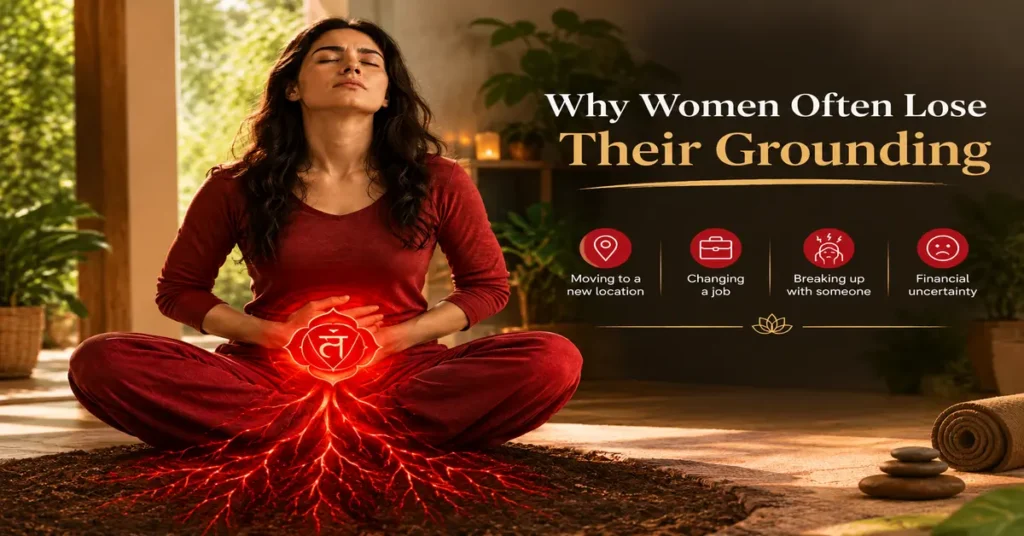
Most of us have a load we do not see—our responsibilities, needs, and emotions placed upon our shoulders. We stay in a constant state of doing, constantly alert, and our bodies never get the signal that it is time to relax. That is the way blocked root chakra symptoms build up over time.
Major changes in life may cause blockages of the root chakra too: moving to a new location, changing a job, breaking up with someone, going through grief or a period of financial uncertainty. There might be no specific reason for the issue; only many months of too much.
The positive thing is that this energy center usually reacts positively to physical activities.
How to Unblock the Root Chakra: 5 Grounding Practices
If you recognize blocked root chakra symptoms in yourself, pick one or two of these. Consistency matters far more than doing everything.
1. Root Chakra Yoga Poses
Root chakra yoga poses press the feet, hips, and sitting bones into the earth. Move slowly and feel every contact point.
- Mount Pose (Tadasana): Place feet at shoulder width and stand firm, breathing slowly for five rounds.
- Squat (Malasana): The squat pose helps open up hips and the pelvic floor region. If your feet cannot be planted flat, use blankets underneath.
- Warrior II (Virabhadrasana II): Step feet wide and establish your foundation and stillness and silence.
- Tree Pose (Vrsksasana): Place firmly your feet on the ground just like your roots, and focus inward.
- Standing Forward Bend (Uttanasana): Relax your mind after its busy actions and if your back is tight, then keep knees bent.
- Half Bridge (Setu Bandhasana): Ground the feet and at the same time support lower back.
- Child’s Pose (Balasana): Allow the ground to embrace and hold you.
- Corpse Pose (Shavasana): Finish the class by lying down in this pose for five minutes.
Hold each for 5 to 8 slow breaths. If something hurts, ease out. The goal is steadiness, not intensity. To string poses into a routine, see our guide on building a chakra yoga practice.
2. Chant the LAM Mantra
Lam (loosounded like “loom”) is the seed sound of the Root Chakra. In a comfortable seating position with hands resting on the thighs, take a deep inhalation breath. While exhaling, chant LAM silently in an even tone, and feel the vibrations coming up from the base of the spine. Practice 5-10 rounds, then remain still for a minute.
The practice of chanting helps you lengthen the exhalation period, thereby communicating your nervous system to slow down.
3. Ground with Singing Bowls
Sound is one of the most tender methods of relaxing an agitated system since absolutely nothing needs to be done by you. All you need to do is lie down and allow the vibration to flow through you.
The low-frequency bowls are associated with the root chakra, and women have often felt relieved of their breath with the deep resonance of these bowls. At Shaktaa, we incorporate the same technique in our sound healing sessions in Rishikesh, where bowls are combined with breathing and stillness.
For use at home, listen to a recording of the low frequency of bowls while lying down with your legs up against the wall for 10 minutes.
4. Root Chakra Affirmations
Affirmations have their greatest impact when they feel real to you. Say each one slowly, placing your left hand over your stomach.
- I am safe within myself.
- I fit here perfectly.
- I have everything that I need right now.
- I am supported and able to rest.
Change any statement you feel isn’t authentic to yourself by using “I am learning…” Pick one and practice saying it for a week.
5. Nourish Your Root: Foods, Oils, and Earth
Root chakra foods: Earth-based or cooked and warmed foods, such as sweet potato, carrot, beetroot, radish, ginger, red lentils, and hearty soups. Take the time to sit down to eat, and take your food slowly. As with all of this work, how you do this is just as important as what you eat.
Root chakra essential oils: Earthy and woodsy scents, such as vetiver, sandalwood, cedarwood, and patchouli, have been used traditionally to ground. You should always dilute your oil before using it and do a patch test first. Just before your practice, take three deep breaths of the scent and focus on one intention.
Earth connection: Walking around outside in bare feet, sitting under a tree, or simply standing with your feet touching the earth for a few minutes every morning can be very grounding and is a simple, cost-free technique.
A 10-Minute Root Chakra Routine
On busy days, this is enough:
- Minutes 1-2: Stand in Mountain Pose, feet rooted, breathing slowly.
- Minutes 3-5: Move through Garland Pose and Child’s Pose, a few breaths each.
- Minutes 6-8: Sit and chant LAM, hands on thighs.
- Minutes 9-10: Lie down, legs up the wall, and repeat one affirmation silently.
Do it 4 to 5 days a week for two to three weeks before judging results. Roots grow slowly, and that’s the point.
When It May Not Be (Only) a Chakra Issue
However, grounding exercises may help many women feel at ease; yet, they cannot serve as a panacea for all cases. Should you experience severe symptoms that are related to a closed root chakra, such as persistent fear, panic, depression, or insomnia, you may need to see your physician or mental health expert. Persistent pain, gastrointestinal issues, or fatigue should be evaluated by your doctor as well
Taking It Deeper: Healing in a Supported Space
Being told about grounding and being grounded are two completely different things. It is difficult to calm down an agitated nervous system when you are busy responding to messages, managing the household, and following your normal routine.
This is why taking a couple of days out can be such a life-changing experience for many women. Free from all the chaos, with yoga, meditation, sound, and healthy food, the body gets a very clear message that it can relax.
If you have been considering if a brief getaway would make a difference, then you might want to look at a 3-day yoga retreat in Rishikesh.
Frequently Asked Questions
What are the most common blocked root chakra symptoms?
The most common blocked root chakra symptoms are anxiety, feeling ungrounded, money or security worries, trouble keeping routines, feeling disconnected from your body, lower-body tension, and not feeling you belong. These are traditional associations, not medical diagnoses.
How do I unblock the root chakra?
Combine grounding poses like Mountain and Garland Pose, chant the LAM mantra, slow your breathing, eat warm earthy foods, and keep a steady daily rhythm. Practice 10 to 15 minutes, 4 to 5 days a week.
How long does root chakra healing take?
There is no fixed timeline. Many people feel calmer and more settled within a few weeks of regular practice, but it varies from person to person.
What does the LAM mantra do?
LAM is the traditional seed sound of the root chakra. Chanted low and slowly, it is believed to bring a sense of grounding and stability.
Which root chakra foods and oils should I try?
Root vegetables like sweet potato, carrot and beetroot, plus warm spices like ginger. For oils, vetiver, sandalwood, cedarwood and patchouli are popular. Always dilute and patch test.